

Table of Contents
- Importance of Preserving Clock Towers
- Challenges in Restoration
- Successful Restoration Projects
- Modern Technologies in Preservation
- Community Involvement and Funding
- Final Thoughts
Historic clock towers grace city skylines and town squares across the globe, embodying centuries of craftsmanship and acting as visual centerpieces for their communities. Their preservation is more than a matter of aesthetics; it is about safeguarding the stories and skills of our ancestors for tomorrow’s citizens. Whether these monuments keep time in bustling urban plazas or overlook quiet rural villages, maintaining them is both a technical and a cultural imperative. For those tasked with such upkeep, specialized expertise in bell tower repairs is often required to ensure that restoration is sympathetic and historically accurate.
Clock towers serve not only to tell time, but to anchor collective memory and signal the passage of eras. The challenge is that these iconic structures face myriad threats, including weather, neglect, and obsolescence. Across the world, the movement to save and restore these landmarks is gaining new momentum as cities recognize the benefits to culture, tourism, and civic pride. From the essential advocacy roles played by local residents to modern interventions by expert artisans, the preservation process is both community-driven and technically demanding.
The process is also profoundly linked to the educational opportunities these towers provide. School groups, tourists, and historians alike visit such sites to learn about industrial history, architectural design, and mechanical ingenuity. Many towns have seen revitalized economic benefits from restoring their heritage clock towers, boosting local businesses, and creating a stronger sense of place.
Importance of Preserving Clock Towers
Clock towers are unique artifacts that reveal much about the values and technological capabilities of the eras in which they were built. These structures frequently feature ornate stonework, complex mechanisms, and towering presence, becoming landmarks for generations. Preservation ensures that future communities continue to benefit from these symbols of resilience and ingenuity. When diligently maintained, historic clock towers serve as educational touchstones and help foster local pride and a sense of continuity. They evoke memories of public gatherings, celebrations, and times of change, reinforcing their role in collective consciousness.
Challenges in Restoration
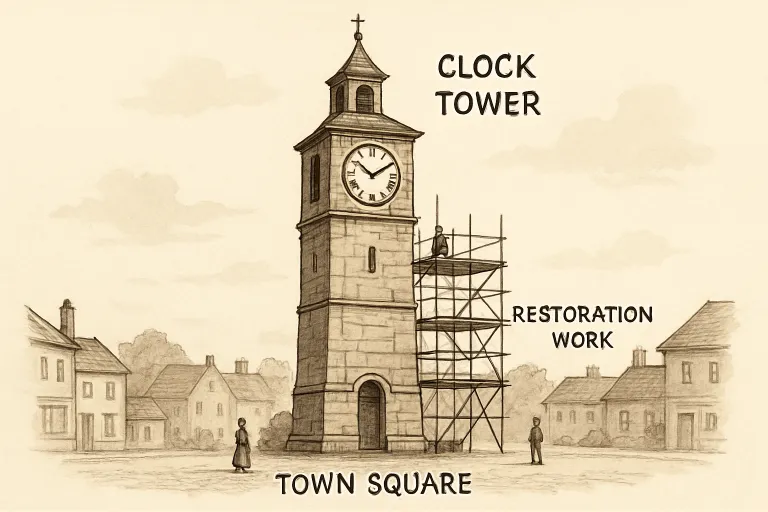
Despite their cultural significance, many clock towers fall victim to challenges that complicate restoration efforts:
- Structural Deterioration: Clock towers are exposed to harsh weather and environmental pollutants, which can compromise both exterior masonry and internal supports. Over decades, bricks can crumble, metal can rust, and wood can rot, demanding skilled work to restore structural integrity.
- Mechanical Failures: The original clock mechanisms, often intricate combinations of gears and weights, may stop working without ongoing specialized maintenance. Finding qualified professionals and period-appropriate parts is both costly and time-consuming.
- Material Sourcing: Matching historical construction materials such as slate roofs, bell metals, and period glass poses additional hurdles for restoration teams. Authenticity in material choice is crucial to maintaining historical accuracy.
- Funding Constraints: Extensive repair and conservation can require significant budgets. Small towns might struggle to secure the resources they need, making grant funding, donations, and public-private partnerships crucial to many projects.
Successful Restoration Projects
Rochester’s Clock of Nations
Rochester’s much-loved Clock of Nations, a fixture for decades, was brought back to life in 2025 through a collaborative effort uniting local organizations and private donors. The clock was reinstalled within the Tower 280 lobby, making its elaborate face and musical chimes accessible to the public once again. With the aid of a $25,000 grant from the Community Foundation, this project became an exemplar of successful urban landmark restoration, ensuring a tangible link to Rochester’s post-war growth.
Schenectady City Hall Clock Tower
The rehabilitation of Schenectady’s City Hall clock tower addressed significant deterioration while respecting the building’s history. In 2025, preservationists and city officials completed work that protected the clock’s intricate mechanisms and masonry, ensuring reliability for years to come. This project not only stabilized a key visual landmark but also revitalized civic space.
Modern Technologies in Preservation
Today, digital innovation allows heritage professionals to monitor, maintain, and conserve historic structures more effectively than ever. Technologies such as parametric digital twins offer real-time, data-driven insights into building conditions, helping to guide critical conservation interventions. For example, research at Löfstad Castle in Sweden has shown that digitalization can help heritage teams manage environmental conditions and prevent damage before it occurs. High-precision 3D scanning, humidity monitoring, and even AI-based analysis of wear patterns help teams identify vulnerabilities and plan targeted restoration, preserving authentic features while extending the lifespan of irreplaceable mechanisms.
Community Involvement and Funding
Beyond the technical work, community commitment is essential in protecting clock towers. In the city of Tunstall, community advocacy led the council to prioritize specialist repairs to the historic clock tower. The restoration returned the chimes to local life, as part of broader investments to revitalize the downtown. Grassroots efforts often provide the energy and visibility needed to achieve funding goals, whether through organizing events, contributing volunteer labor, or publicizing restoration needs.
Final Thoughts
The journey to preserve historic clock towers relies on blending innovative technology, community spirit, and robust funding. Each restored tower stands testament to the dedication of those who value heritage as a living, instructive asset. As more communities commit to safeguarding these landmarks, they ensure not only the preservation of unique architectural treasures but also the endurance of shared history for generations to come.