
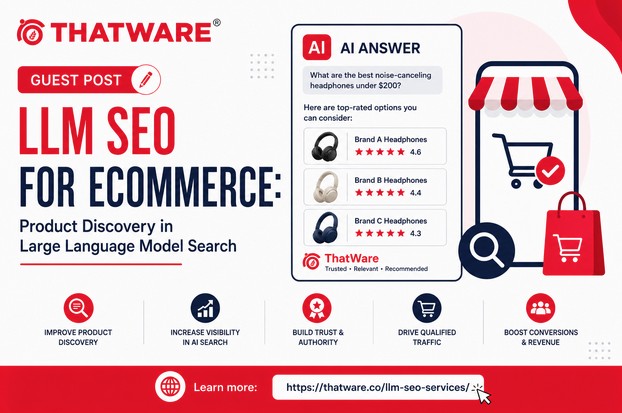

eCommerce has always lived or died on discovery. Getting in front of someone at the moment they’re ready to consider purchasing something in your category is the whole game. For most of the past two decades, that meant Google Shopping, organic search rankings, and paid ads. The discovery landscape is fragmenting in 2026 in ways that require eCommerce brands to think seriously about AI-mediated product discovery.
How AI Is Changing eCommerce Discovery
The shift is most visible in the research phase of purchase. Consumers increasingly ask AI assistants questions like “what’s a good under-$200 espresso machine for a small kitchen?” or “best running shoes for wide feet with high arches?” These are queries that naturally invite a synthesized recommendation.
eCommerce LLM SEO services are specifically designed to address that gap — building the kind of content presence and authority signals that get products into AI-generated product discovery answers.
The Difference Between Product Pages and Discovery Content
Here’s a structural challenge for eCommerce: most product SEO is optimized for transactional queries — someone who already knows roughly what they want. AI discovery queries are more exploratory. The user doesn’t necessarily have a brand preference yet; they want guidance.
This means eCommerce brands need a separate content layer that addresses discovery intent: comparison content, problem-solution content, use-case guides. This content isn’t designed to sell directly — it’s designed to position your products in the category conversations that AI assistants are summarizing.
Schema, Structured Data, and Model Readability
Technical foundations matter a lot for eCommerce LLM SEO. Product schema, review schema, and properly structured product descriptions give language models clear signals about what a product is and what credible buyers think of it.
Effective LLM SEO optimization for eCommerce requires a dual investment: the technical layer (structured data, clear product taxonomy) and the content layer (category expertise, buyer guides, comparison frameworks). Neither alone is sufficient.
Category Authority as the Core Asset
The eCommerce brands most successful at LLM visibility tend to have built genuine category authority — not just product pages. They’re the brand that also has the definitive guide to choosing the right product in their category. That category authority is what makes a language model reach for your brand when a user asks a discovery question.
Getting Started
For most eCommerce brands, the LLM SEO starting point is a gap analysis: what discovery queries in your category are being answered by AI assistants today, and are you present in those answers? That audit reveals the opportunity map. From there, a combination of content development, structured data improvement, and third-party presence building can systematically close those gaps.